

Exercises For Bicep Growth

Now that you understand the anatomy of the biceps and the principles for maximizing bicep growth, let’s explore some of the best exercises for bicep growth.
Barbell curls
- Barbell curls are a classic bicep exercise that targets the short head of the biceps. To perform barbell curls, stand with your feet shoulder-width apart and hold a barbell with an underhand grip. Your hands should be shoulder-width apart. Curl the bar up to your chest, keeping your elbows close to your body. Lower the weight back down and repeat for 3-4 sets of 8-12 reps.
Dumbbell curls
- Dumbbell curls are another classic bicep exercise that targets the short head of the biceps. To perform dumbbell curls, stand with your feet shoulder-width apart and hold a dumbbell in each hand. Your palms should be facing forward. Curl the weights up to your chest, keeping your elbows close to your body. Lower the weights back down and repeat for 3-4 sets of 8-12 reps.
Hammer curls
- Hammer curls are a great exercise for targeting the brachialis muscle, which is located beneath the biceps. To perform hammer curls, stand with your feet shoulder-width apart and hold a dumbbell in each hand. Your palms should be facing each other. Curl the weights up to your chest, keeping your elbows close to your body. Lower the weights back down and repeat for 3-4 sets of 8-12 reps.
Chin-ups and pull-ups
- Chin-ups and pull-ups are great exercises for targeting the long head of the biceps. To perform chin-ups, grab a pull-up bar with an underhand grip and pull your body up until your chin is above the bar. To perform pull-ups, grab the bar with an overhand grip and pull your body up until your chest touches the bar. Aim for 3-4 sets of as many reps as possible.
Preacher curls
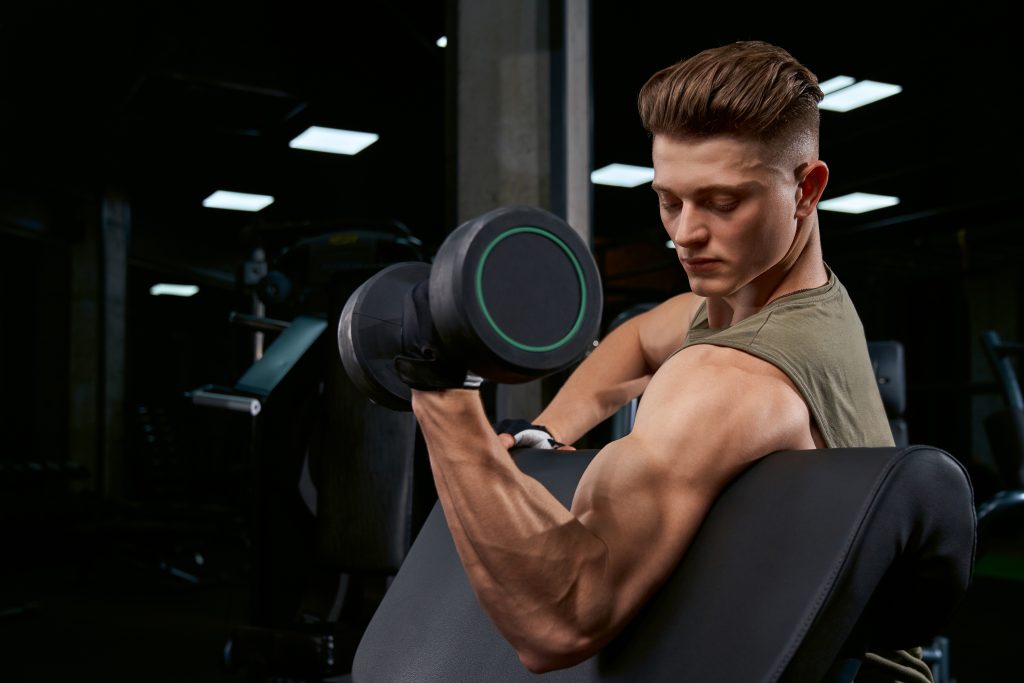
- Preacher curls are a great isolation exercise for targeting the biceps. To perform preacher curls, sit at a preacher bench and place your upper arms on the padded support. Hold a barbell with an underhand grip and curl the weight to your chest. Lower the weight back down and repeat for 3-4 sets of 8-12 reps.
Developing A Bicep Workout Routine
Now that you’ve explored some of the best exercises for bicep growth, let’s look at how to develop a bicep workout routine. It’s important to remember that your biceps are just one muscle group, so you should incorporate bicep exercises into a larger strength training routine.
A good bicep workout routine should include a mix of compound exercises (such as chin-ups and pull-ups) and isolation exercises (such as bicep curls and preacher curls). You should aim to perform bicep exercises 2-3 times per week, with at least one day of rest in between.
Here is an example bicep workout routine:
- Chin-ups – 3 sets of as many reps as possible
- Barbell curls – 3-4 sets of 8-12 reps
- Hammer curls – 3-4 sets of 8-12 reps
- Preacher curls – 3-4 sets of 8-12 reps
Recovery And Injury Prevention

To maximize bicep growth, allowing your muscles time to recover between workouts is important. This means getting enough sleep, eating a healthy diet, and avoiding overtraining. Overtraining can lead to injuries and slow muscle growth, so make sure you give your muscles enough time to recover.
In addition, paying attention to any pain or discomfort you may be experiencing during bicep exercises is important. If you feel any sharp or shooting pain, stop the exercise immediately and seek medical attention if necessary. Common bicep injuries include strains, tears, and tendonitis.
To prevent bicep injuries, ensure you use proper form during exercises, avoid lifting too much weight, and warm up properly before workouts. You can also incorporate stretches and mobility exercises to improve flexibility and prevent injury.
Use This Guide To Grow Your Biceps Today!
Building strong and well-defined biceps is a common goal for many people who engage in strength training. By understanding the anatomy of the biceps, following key principles for maximizing bicep growth, performing the right exercises, developing a bicep workout routine, and focusing on recovery and injury prevention, you can achieve your bicep goals and build a stronger, more powerful upper body. Remember to always prioritize safety and proper form, and don’t be afraid to seek out the guidance of a qualified trainer