
Do you ever feel stiff and achy? If so, you’re not alone. Many people feel that way because they don’t move enough during the day. When you’re inactive, your muscles and joints get tight, leading to pain and discomfort. The good news is that you can add many mobility exercises to your daily routine to help loosen up your body. This blog post will discuss some of the best mobility exercises you can do to improve your flexibility and joint health!
Why Mobility Exercises Are Important

There are many reasons why mobility exercises are essential. For one, they help improve range of motion and flexibility, leading to improved performance in activities of daily living and sports and other physical activities.
Additionally, mobility exercises can help to reduce the risk of injuries. By stretching and strengthening the muscles and joints, mobility exercises help promote optimal joint function, decreasing the likelihood of developing arthritis or tendinitis.
Finally, mobility exercises can help to improve overall circulation and increase energy levels. By improving blood flow and oxygenation throughout the body, mobility exercises can leave you feeling refreshed and invigorated. For all these reasons, it is clear that mobility exercises are an essential part of a healthy lifestyle.
5 Mobility Exercises To Add To Your Routine
Below are five mobility exercises you can do without equipment and only take a few minutes to complete. If you want to improve your flexibility and ease your joints consider adding these to your routine!
Lateral Lunge

The lateral lunge is a great mobility exercise for people of all fitness levels. It’s a simple movement you can do without any equipment, and it helps improve flexibility and range of motion in the hips and legs. The lateral lunge also helps build strength in the muscles around the hips and knees, improving stability and reducing the risk of injuries.
To do a lateral lunge:
- Start by standing with your feet hip-width apart.
- Take a big step to the side with your right foot, lowering your hips until your right thigh is parallel to the ground.
- Keep your left leg straight as you push off with your right foot to return to the starting position.
- Repeat on the other side.
You can also add weight to this exercise by holding a dumbbell in each hand or by wearing a weighted vest or backpack. Start with light weights and gradually increase the weight as you get stronger. For an added challenge, try doing lateral lunges with your eyes closed, which will help to improve your balance and coordination.
Prying Squat
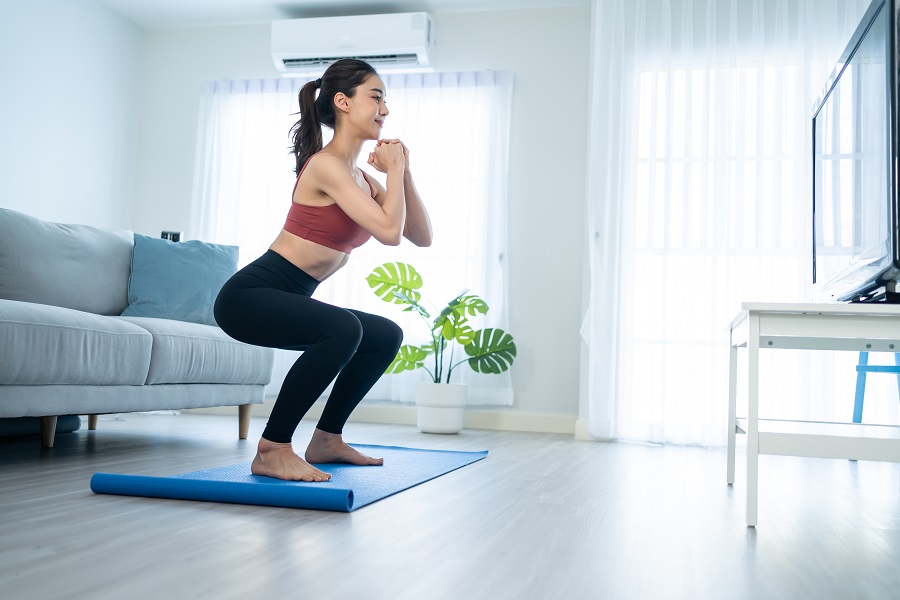
The prying squat is a great mobility exercise for many reasons. First, it helps to stretch the muscles and ligaments around the knee and ankle, which can help to improve the range of motion and reduce the risk of injury.
Second, the prying squat helps to improve balance and coordination. The prying squat can help you become more agile and responsive on your feet by challenging the stabilizer muscles. Finally, the prying squat is a great way to build strength in the lower body. By working against your body weight, you can develop strong muscles and connective tissue.
To do a prying squat:
- Start in a standing position with your feet shoulder-width apart.
- From there, lower yourself into a squatting position, keeping your back straight and your weight in your heels.
- Once you reach the bottom of the squat, place your elbows on the inside of your knees.
- Gently push against your knees with your elbows to stretch the groin and abductors.
As you become more comfortable with the exercise, you can add weight by holding a dumbbell or kettlebell in front of your chest.