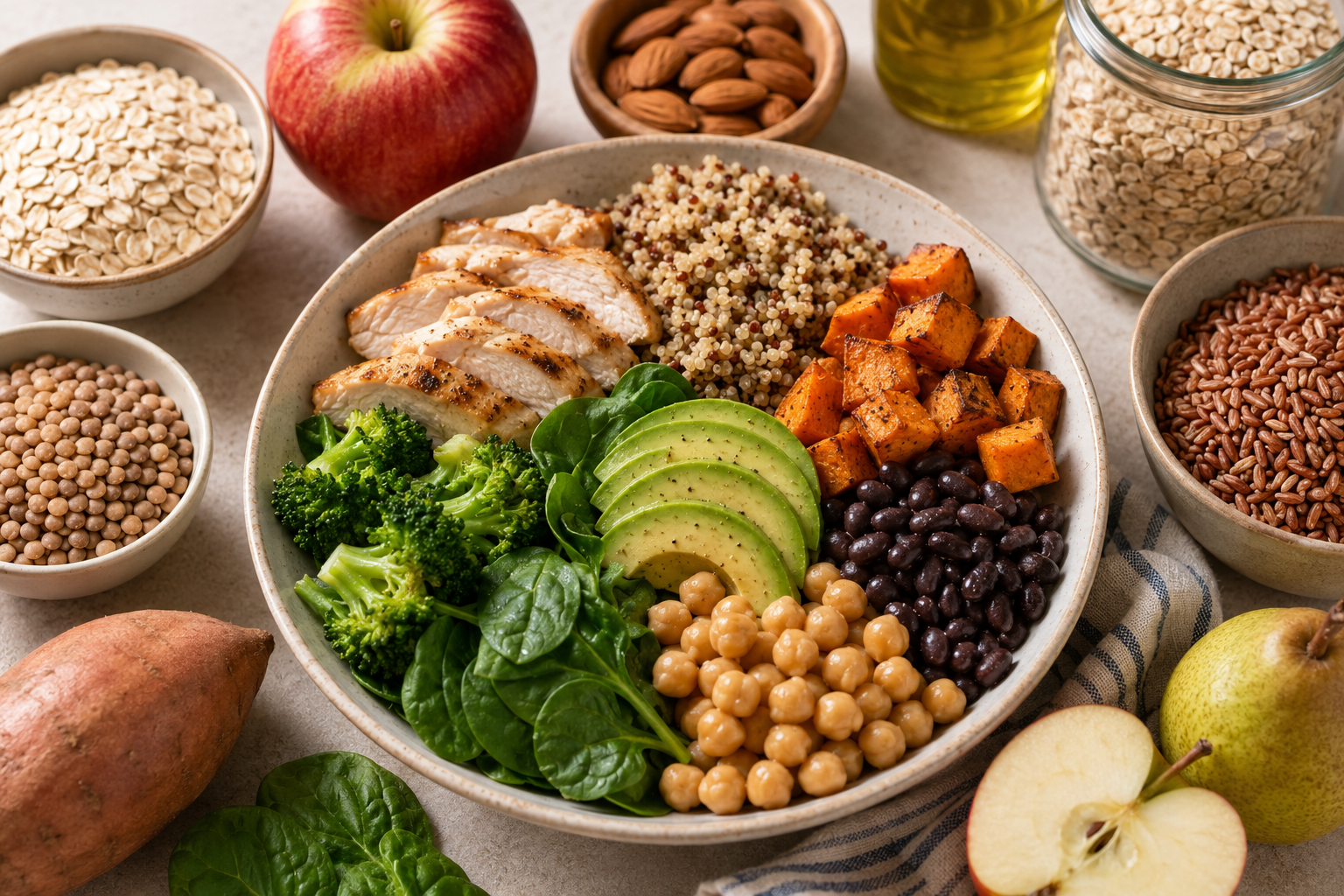
Check Out The Healthy Eating Food Pyramid

Fat, oil, salt, and sugar: Fat, oil, salt, and sugar are a few nutrients that play a vital role in a balanced diet for a healthy lifestyle. Fat is essential for energy, protein synthesis, and cell function. Oil, a combination of fat and protein, is a source of power and has many crucial functions in the body. Salt and sugar, which are found in various foods, play vital roles in our bodies, such as providing the body with energy, regulating water balance, and aiding in the absorption of nutrients from food.
The FDA recommends 2,300 milligrams of sodium, 420 calories from fat, and 40 grams of sugar per day. In addition to these calories, grease, oil, and salt help with many body processes, including the nervous system. Even more importantly, they nourish the cells in our bodies, boosting their functioning and also helping to keep our bodies functioning at peak performance. Eating foods rich in monounsaturated fats, like nuts, olive oil, and avocados, reduces your risk of heart disease.
Milk and Milk products: Milk is a nutrition powerhouse that has been a healthy choice for almost as long as it has been around, and it is still a healthy choice today. It is an essential part of a nutritious diet. Milk and milk products such as cheese contain various nutrients, including a good amount of protein, multiple vitamins and minerals, and a good amount of calcium.
Fruits and vegetables: Consuming the right amount of fruits and vegetables is key to a healthy diet. For example, the recommended daily amount of vegetables consumed by the U.S. Department of Agriculture range from 2.5 to 8 cups per day. Or, if you are on a low-carb diet, you may only need 2-7 servings of fruits and vegetables per day (depending on your carb intake). Or, if you are at risk of obesity, the recommended daily amount of fruits and vegetables for you is 3-5 servings per day. And, if you are dealing with any health issue, you should be consuming 8-10 servings of fruits and vegetables per day (depending on your health concern).
Meat, Fish, and Egg: Meat, fish, and eggs are essential parts of a healthy diet. It is necessary for health and body development. In addition, meat, fish, and eggs are required for building muscles. Beef, poultry, fish, eggs, nuts, seeds, and soluble fiber contribute to a healthy diet.
Grains: A diet high in grains, including wheat, barley, rice, and oats, provides several health benefits—including healthy body weight, a healthy heart, and a healthy blood sugar level. For healthy body weight, a diet that is high in grains is a good idea. For example, grains are not only an essential part of a healthy diet, but they are also a nutrient-dense food group. Therefore, the USDA recommends consuming 3-4 servings of grain foods per day. They’re also a great way to get a healthy dose of carbohydrates, which help to keep your blood sugar steady and keep you from overeating.
Conclusion
According to the U.S. Department of Agriculture (USDA), the food pyramid is still relevant today, but with a few critical changes. Today’s healthy eating guidelines from the USDA now include a recommendation to eat more fruits and vegetables and less fat, trans fat, and sodium. The food pyramid also recommends foods lower in saturated fat and sodium, such as lean meats, poultry, and fish.