

Health & Wellness Guide
Things That Happen to Your Body When You Sit Too Long
A plain-language look at how long stretches of sitting affect your muscles, circulation, metabolism, spine and mood, and what health authorities suggest doing about it.
Sitting is such a normal part of modern life that few people think about what it does to the body, yet the things that happen to your body when you sit too long are now a major focus of public health research. Many people sit during commutes, at desks, over meals and in front of screens, which can add up to most of their waking hours. Health organizations including the World Health Organization and the U.S. Centers for Disease Control and Prevention have drawn attention to sedentary behavior as a risk factor that is separate from, though related to, a lack of exercise. This article walks through the main systems of the body affected by prolonged sitting, explains what researchers believe is happening, and notes where the evidence is still based on observation rather than proof of cause and effect.
Muscles and Energy Use: What Prolonged Sitting Does to Your Muscles

When you stand or walk, large muscle groups in the legs, hips and trunk work continuously to keep you upright and moving. Once you sit down, much of that work stops. The big muscles of the lower body become far less active, and your body uses less energy than it does during even light movement such as strolling or standing at a counter. Over days and years, a pattern of long uninterrupted sitting means those muscles get fewer chances to contract and to take up fuel from the bloodstream.
Inactive muscles can also lose strength and endurance over time. The glutes, which help you rise from a chair, climb stairs and stabilize your pelvis, are commonly cited by physical therapists as muscles that can become underused in people who sit a lot. At the same time, the hip flexors at the front of the hips remain in a shortened position while seated, and many clinicians note that this can contribute to a feeling of tightness when standing up. These are widely described changes, though the degree varies from person to person depending on overall activity, age and fitness.
Heart Health and Circulation: Blood Flow Changes During Long Periods of Sitting
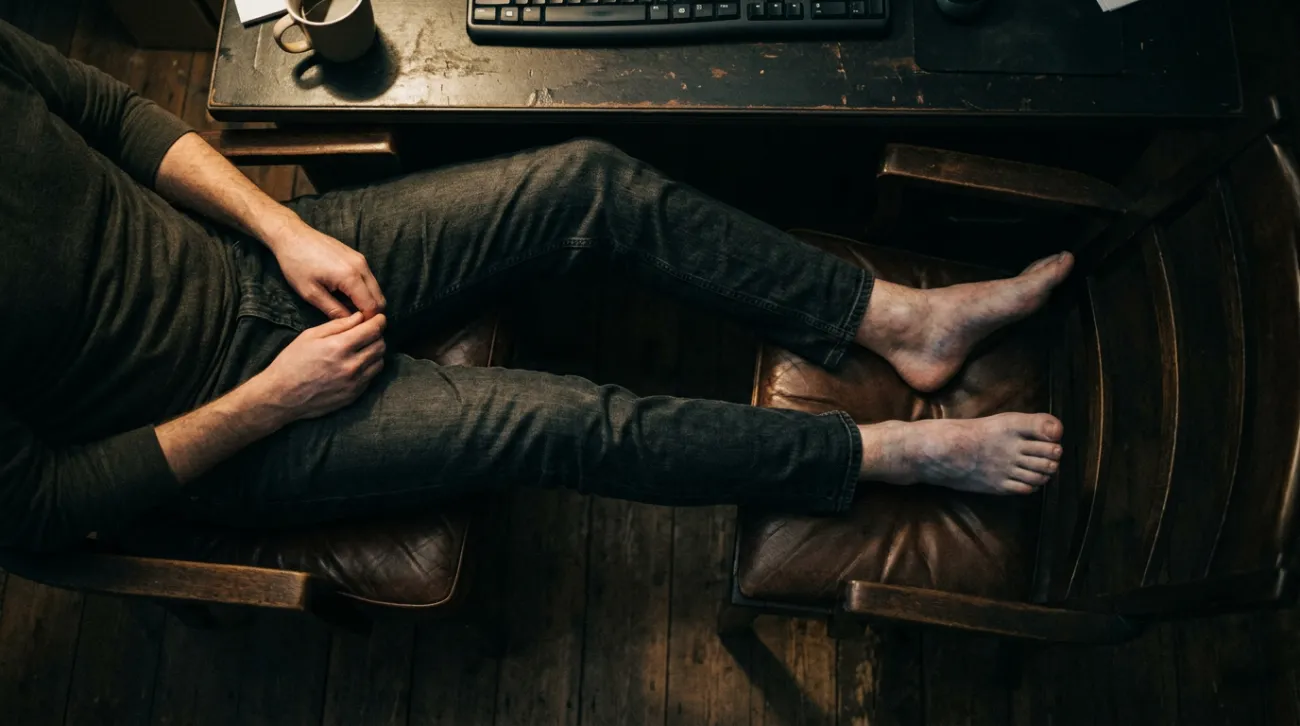
Muscle movement in the legs helps push blood back toward the heart. When you remain seated for long periods, that pumping action is reduced, and blood flow in the lower limbs can slow. Many people notice this as mild swelling in the feet or ankles at the end of a long day or after a long flight. For most healthy people this is temporary and fades with movement, but it illustrates how closely circulation is tied to activity.
Slow blood flow is also one reason that long periods of immobility, such as extended travel, are associated with a higher risk of blood clots in the deep veins of the legs, a condition known as deep vein thrombosis. Health agencies generally advise people on long trips to move around when possible, stretch their legs and stay hydrated. Beyond these short-term effects, large observational studies and reviews have linked high amounts of sedentary time with a greater risk of cardiovascular disease. The American Heart Association has published a scientific statement on sedentary behavior and cardiovascular health. Because these studies observe groups of people rather than assigning them to sit or not, they show association, not proof that sitting alone causes disease.
Blood Sugar and Weight: The Metabolic Effects of a Sedentary Lifestyle
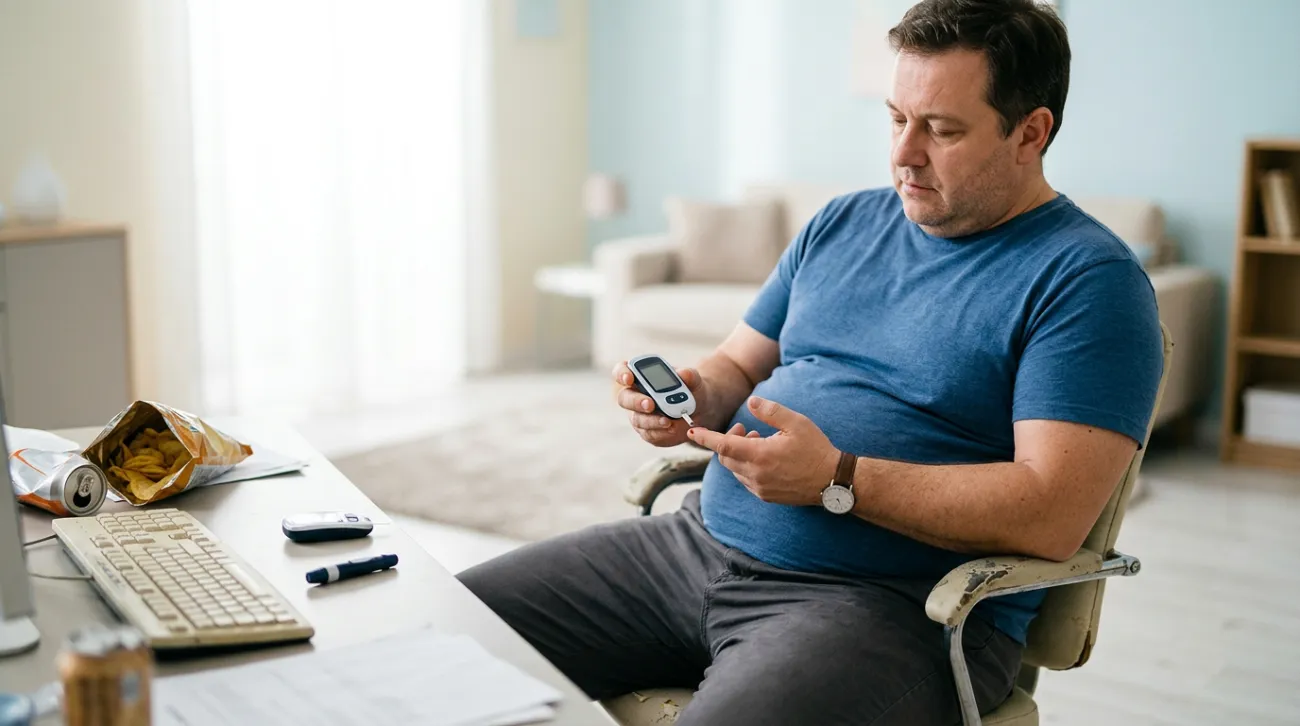
Muscles are one of the main places the body stores and uses glucose, the sugar carried in the blood. When muscles are active, they take up glucose efficiently, partly without needing a large insulin response. When they are idle for long stretches, that process can become less efficient. Controlled laboratory studies have found that interrupting prolonged sitting with short bouts of light activity, such as brief walks, can improve blood sugar responses after meals compared with sitting continuously. These experiments are usually small and short in duration, so researchers are cautious about how far the results extend to everyday life.
Large population studies have also linked high levels of sedentary time to a greater likelihood of type 2 diabetes and to weight gain, although it can be hard to separate sitting from other habits such as diet, sleep and overall exercise. Lower daily energy expenditure is one plausible explanation, because the small movements people make throughout the day, sometimes called non-exercise activity, contribute to the total number of calories burned. Sitting reduces those movements. Researchers continue to study exactly how much of the metabolic risk comes from sitting itself and how much comes from the lifestyle that often accompanies it.
Back, Neck and Posture: How Sitting Too Long Strains the Spine

Few effects of sitting are as familiar as back and neck discomfort. A seated posture often involves rounding of the shoulders, a forward head position when looking at a screen, and a slumped lower back, especially when a person tires. These positions can place sustained load on the muscles and joints of the neck, shoulders and spine. Without regular changes of position, muscles may fatigue and stiffen, and discomfort can build gradually through the day.
Health and ergonomics organizations commonly recommend adjusting the chair, desk and monitor so the body is supported in a more neutral position, with the feet supported and the screen near eye level. They also stress that even a well-adjusted posture is not meant to be held for hours. The idea behind many workplace guidelines is that the best posture is the next posture, meaning that changing position often matters as much as the position itself. Persistent or severe back pain, particularly with numbness, weakness or pain that spreads into the legs, should be evaluated by a medical professional rather than managed with posture changes alone.
Key takeaway
Most of the health concerns linked to sitting come from long, unbroken stretches combined with low overall activity. Health authorities generally advise limiting sedentary time and replacing some of it with movement of any intensity, which is a more practical goal than avoiding chairs altogether.
Mood, Focus and Mental Health: The Mind-Body Link in Sedentary Time
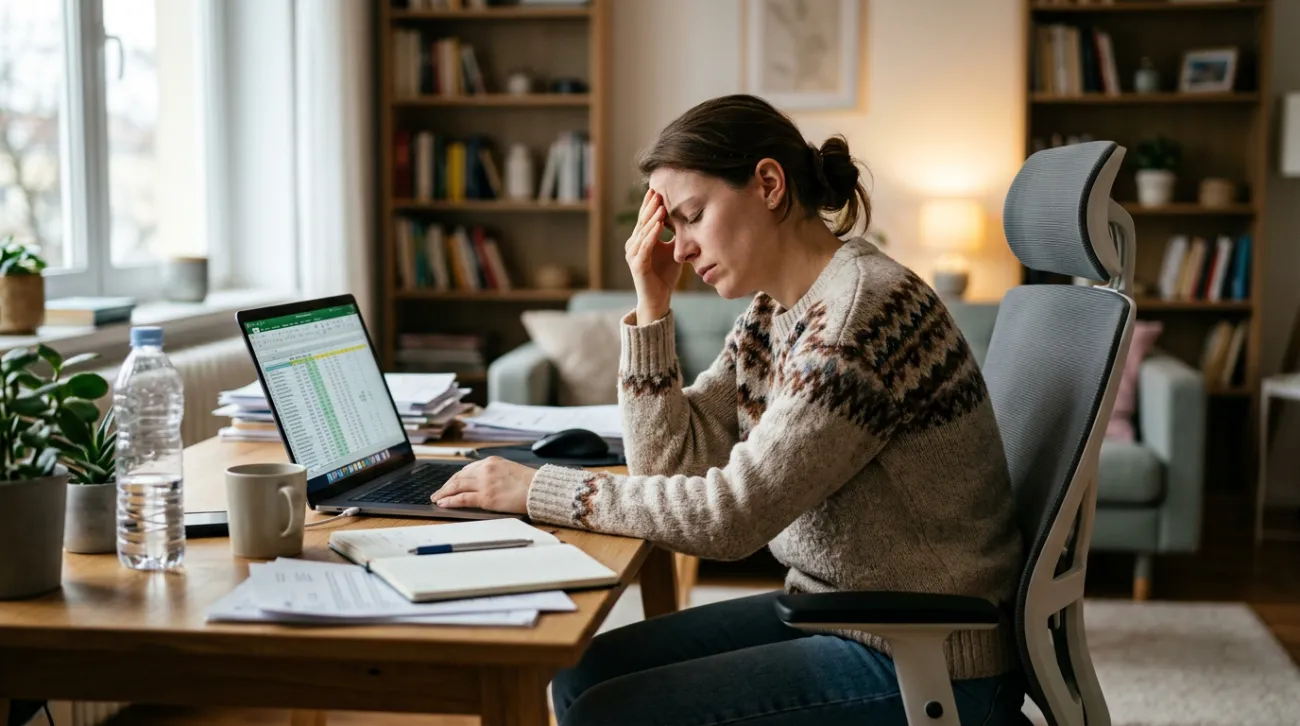
Sitting is not only a physical matter. Several observational studies have found associations between high amounts of sedentary time and a greater likelihood of symptoms of depression and anxiety. The direction of the relationship is not settled, because people who feel low may also move less, so sitting could be both a cause and a result. Researchers also point out that the type of sitting may matter, with some work suggesting that passive activities such as watching television may differ from mentally engaging sitting such as reading or working on a task.
Movement, by contrast, is well known to support mood and alertness. Many people report that a short walk clears their head after a long period at a desk, and physical activity in general is recommended by health agencies as part of maintaining mental well-being. While the evidence on breaking up sitting specifically for mood is still developing, there is little downside to standing, stretching or walking for a few minutes when concentration begins to fade.