
Nutrition Guide
Foods That Keep You Full Longer
How protein, fiber, water content and food structure shape fullness, and how to use them at the table.
Foods that keep you full longer are a practical interest for anyone who has finished a meal only to feel hungry again an hour or two later. Fullness, which nutrition researchers usually call satiety, is shaped by what a food contains, how much space it takes up, how quickly it is digested and how it is prepared. Understanding those factors does not require a special diet or a long shopping list. It mostly means recognizing which ingredients tend to make meals more satisfying and building plates around them, while remembering that individual responses to the same food can differ.
How Satiety Works

Satiety is not a single switch. After eating, the stomach stretches, the digestive tract releases hormones and signals travel to the brain, which interprets them alongside habits, mood, sleep and the sight or smell of food. Hormones such as cholecystokinin, GLP-1 and peptide YY are among those that researchers associate with feeling full, while ghrelin is commonly linked with hunger. The balance of these signals can be influenced by the nutrient makeup of a meal.
Researchers often separate two related ideas. Fullness during a meal is the sense of having had enough, while satiety between meals describes how long that feeling lasts before hunger returns. Foods differ on both counts. A food may seem filling while it is being eaten, yet leave a person hungry soon afterward, and the reverse can also happen. Because appetite is also affected by stress, sleep and social settings, no food guarantees a particular result, but some categories show up repeatedly in the research as more satisfying than others.
Protein Foods and Fullness
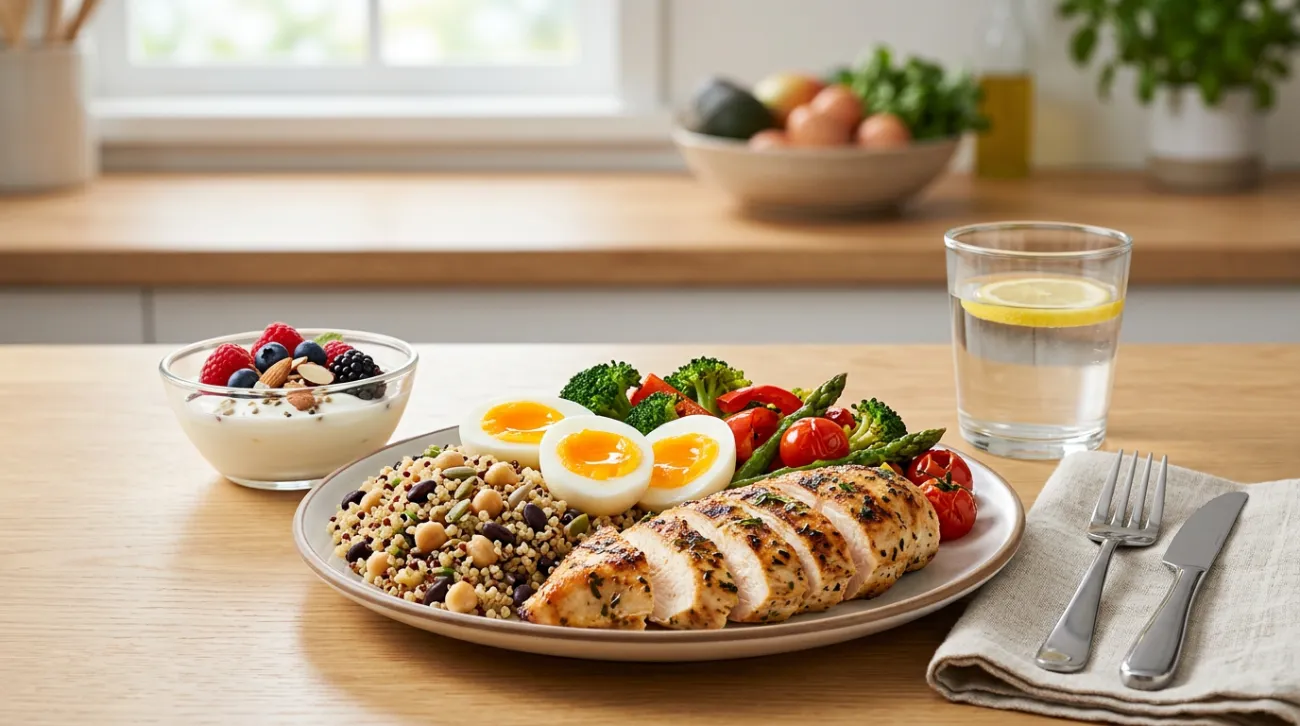
Protein is widely described in nutrition literature as the most satiating of the three macronutrients, meaning it tends to produce more fullness per calorie than carbohydrate or fat. Reviews of the evidence generally find that meals higher in protein can reduce hunger and delay the desire to eat again, although the size of the effect varies between people and between studies.
Practical sources include eggs, fish, poultry, lean cuts of meat, dairy foods such as Greek yogurt and cottage cheese, and plant options such as tofu, tempeh and lentils. Several controlled studies have compared egg-based breakfasts with carbohydrate-heavy breakfasts such as bagels and reported greater reported fullness after the eggs, though these studies were often small and short term. Dairy proteins have also been examined for their effects on appetite hormones. The common thread is that adding a clear protein source to a meal is a simple, low-effort change that has reasonable support behind it.
Protein is not the only factor. Researchers note that fiber, water content, food texture and eating speed all contribute to how full a meal feels, so protein works best as one part of a balanced plate rather than a standalone fix.
High-Fiber Foods for Lasting Satiety
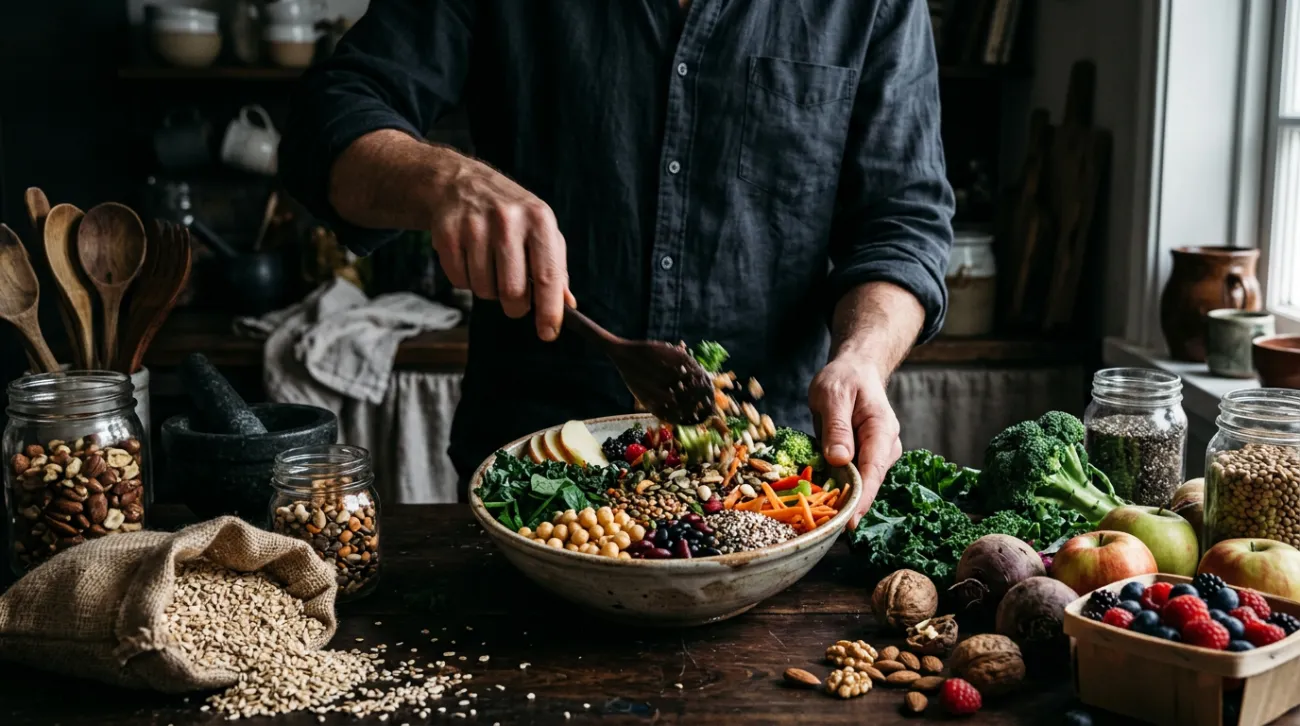
Dietary fiber is the part of plant foods that the body cannot fully digest. It adds bulk, can slow the emptying of the stomach and, in the case of soluble fiber, can form a gel-like substance in the digestive tract. Oats contain beta-glucan, a soluble fiber that has been studied for its effects on both cholesterol and appetite. Beans, lentils, chickpeas and peas, collectively known as pulses, combine fiber with plant protein, which is one reason they are so often recommended for fullness.
A meta-analysis of clinical trials on pulses reported that eating them was associated with increased feelings of fullness compared with control meals, though the authors noted that the evidence for long-term weight outcomes was less clear. Whole grains such as barley, brown rice and whole wheat, along with vegetables, fruit with the skin on, nuts and seeds, also contribute fiber. Increasing fiber gradually and drinking enough fluids can help limit digestive discomfort such as gas and bloating, which is common when intake rises too quickly.
Water-Rich Foods and Meal Volume
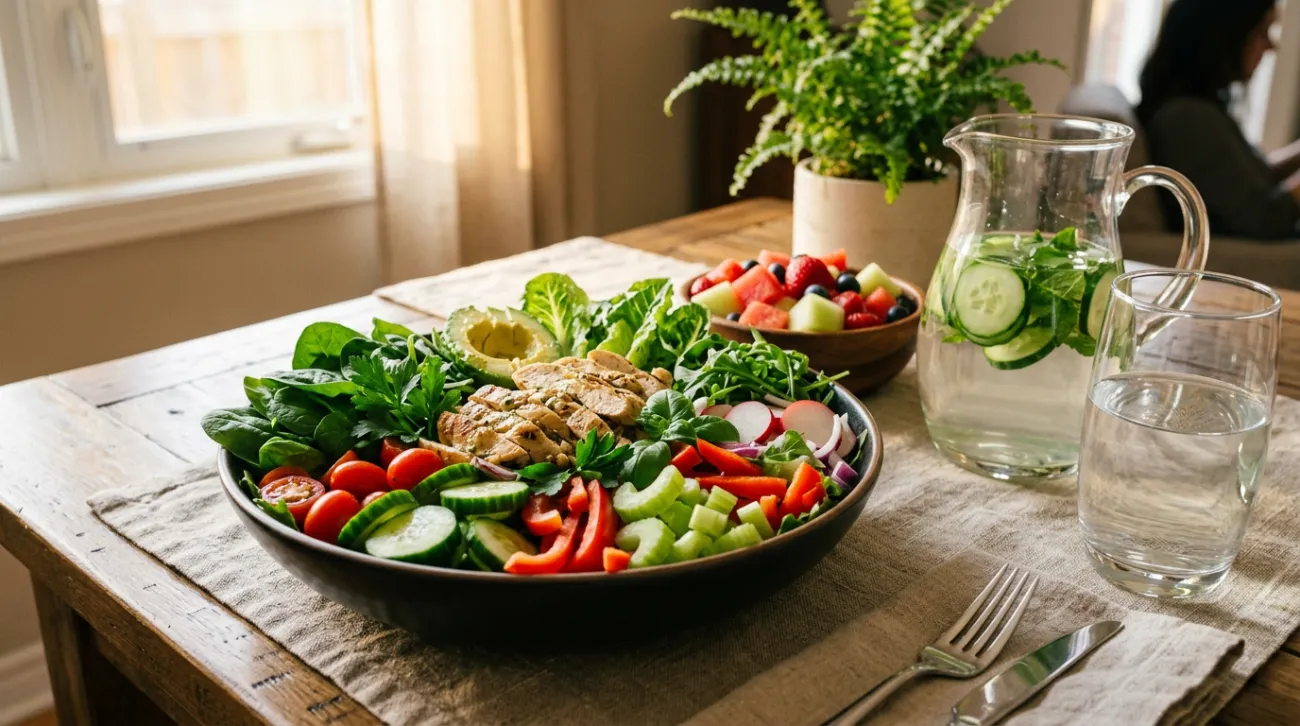
Another factor is energy density, the number of calories in a given weight of food. Barbara Rolls and colleagues at Penn State University have studied this concept extensively and describe how foods with a lot of water and fiber, such as vegetables, fruit and broth-based soups, provide more volume for fewer calories. People tend to eat a fairly consistent weight of food across a day, so choosing foods with lower energy density can allow a satisfying portion size without a large calorie load.
Soup is a frequent example. Some experiments have found that a starter of soup before a meal can lead people to eat less of the main course, although results depend on the type of soup and the study design. Salads, cooked vegetables and fruits such as apples, oranges, berries and melon work in a similar way. The takeaway is not that water alone creates lasting fullness, since drinking a glass of water behaves differently from eating food with water built into it, but that water-rich whole foods add volume that supports satisfaction.
Healthy Fats in Moderation
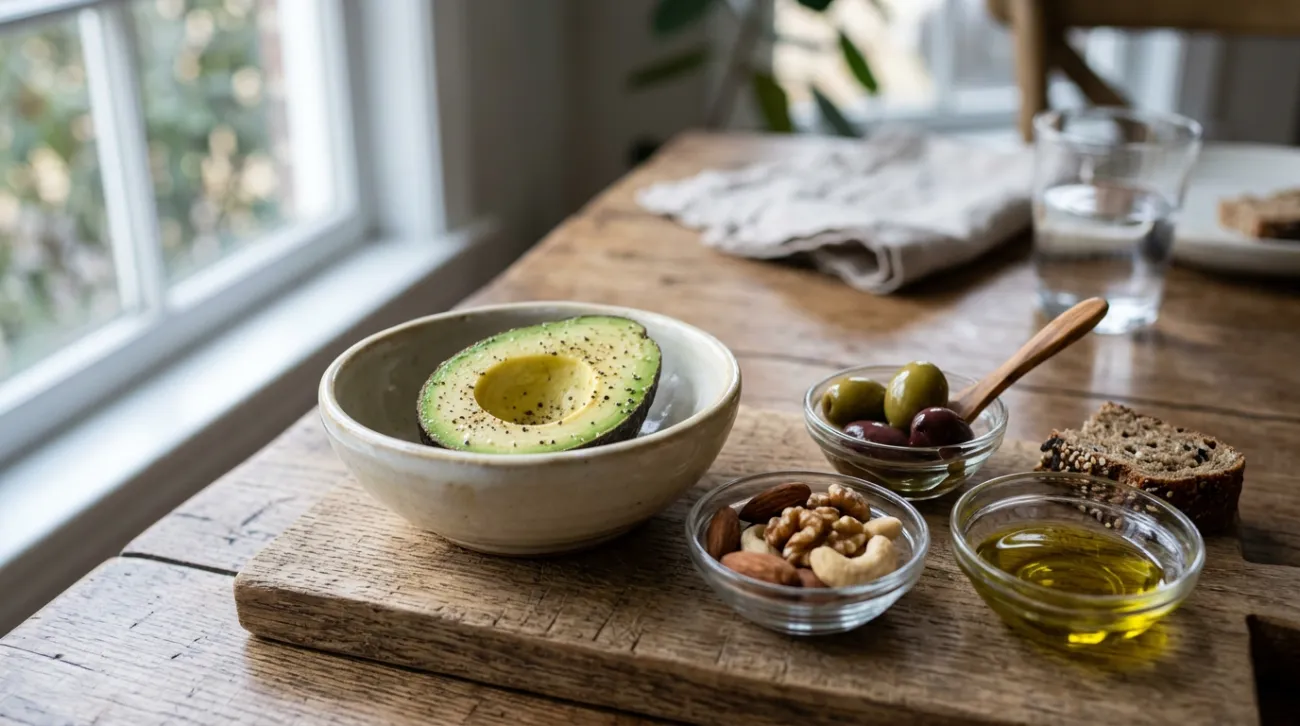
Fat is the most calorie-dense nutrient, and its relationship with fullness is more complicated. Fat slows digestion, which can contribute to a lingering sense of satisfaction, and it makes food taste richer. At the same time, it is easy to eat a large number of calories from fat-rich foods without feeling especially full. Evidence on specific foods is mixed, which is a reason to treat claims about any single fatty food with caution.
Nuts are a useful case. They combine fat, protein and fiber, and some trials have found that eating them can reduce hunger, while others suggest the body does not absorb all of their calories. Avocados, olive oil, nut butters and fatty fish such as salmon can also make a meal more satisfying when used in sensible amounts. Because these foods are energy dense, small portions are generally the point: a handful of nuts or a drizzle of oil can improve a meal without dominating it.